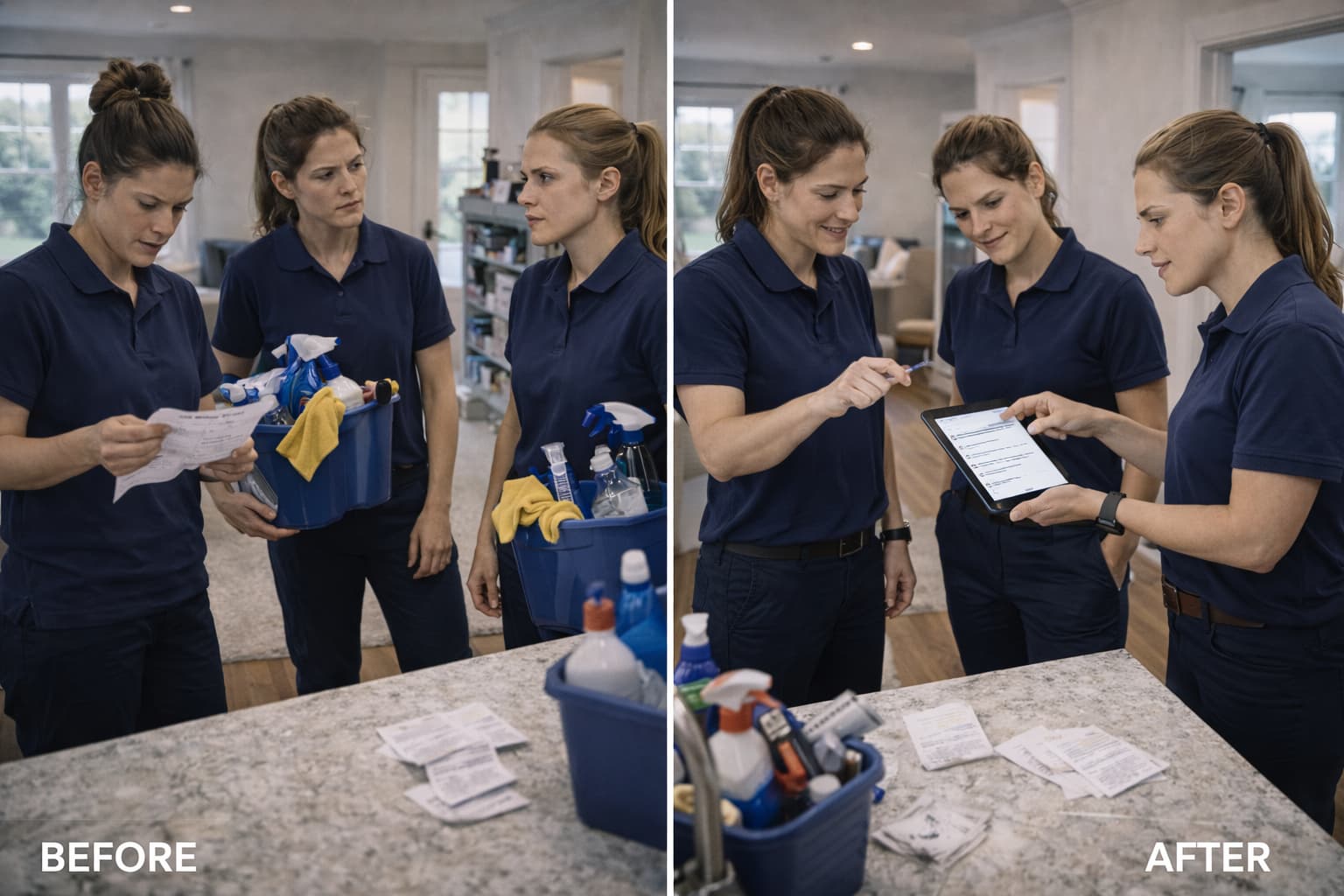
Manage a cleaning team with clear assignments and feedback
Define responsibilities, current job instructions, exception handling and fair feedback for a home service team.
THE SHORT ANSWER
Team management begins with a clear assignment, a shared definition of completion and a reliable way to request help. Review observable work and operating conditions before assigning blame. Software can support the process, but supervision, training and safe work practices still require accountable people.
What you’ll take away
- Give the team current scope and an escalation contact.
- Review evidence and context before judging performance.
- Coach from a specific example and confirm understanding.
In this guide

A worker should not have to guess which instruction is current or who can approve a change. Define these basics before adding more reporting requirements.
Make the assignment usable
Provide the visit, approved scope, time window, relevant property instructions and responsible supervisor. Share access information only through the authorized channel and with people who need it.
Ask a worker to explain what to do if the property cannot be accessed or the requested work differs from the assignment. A usable instruction includes a path for uncertainty.
Define completion together
Choose evidence appropriate to the service: checklist, relevant notes and permitted photos where needed. Avoid collecting unnecessary personal or customer information. Completing a checklist should mean the work was performed, not simply that a box was available.
Use the job completion record to connect exceptions to the same visit. Keep coaching and sensitive staff matters out of customer-facing notes.
Review the conditions behind a difference
Hypothetical example: one visit takes longer because access was delayed and the approved scope changed. Comparing its duration with an ordinary recurring visit would be misleading.
Check scope, property condition, travel, staffing, equipment and training before drawing conclusions. A single metric should not stand in for a complete performance discussion.
Give specific feedback and follow through
Describe the observed situation, the agreed standard and the next practice step. Ask the worker to explain the instruction back or demonstrate it. Review the next comparable task instead of assuming the conversation resolved the issue.
Safety instruction needs a separate, appropriate training process. OSHA's cleaning resources provide starting points for hazard awareness; this management checklist does not replace required training or professional guidance.
The daily operating checklist helps supervisors prepare work. The handoff guide explains how to keep decisions accessible without routing everything through the owner.
Common questions
Should I measure only jobs completed per worker?
No. Consider scope, hours, travel, quality, access and exceptions. A count alone can reward speed while obscuring important operating differences.
Does software replace a supervisor?
No. A system can organize assignments and records, but people still need clear instruction, feedback, escalation and appropriate training.
Sources & context
- Cleaning industry safety resources · OSHA
Context on industry hazards. This DOP operations guide does not replace safety training or establish regulatory compliance.