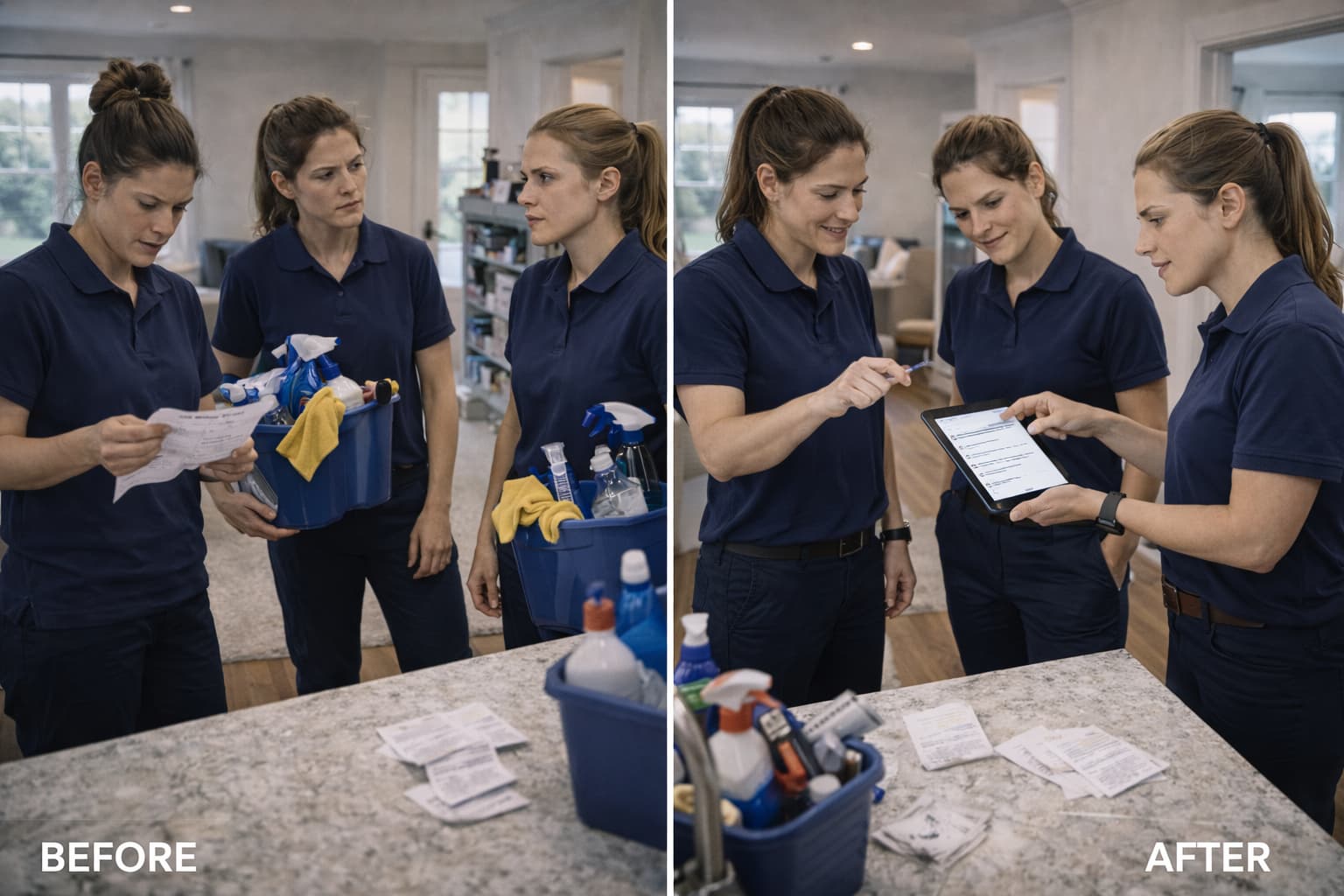
Find unbilled extras and small revenue leaks
Audit scope changes, approvals, job records and invoice lines to find work that was delivered but never billed correctly.
THE SHORT ANSWER
Revenue leaks often occur where approved changes fail to reach the invoice. Compare the original scope, documented approval, completion record and billed lines for a sample of jobs. Distinguish an actual omission from a courtesy, dispute or service that was never authorized.
What you’ll take away
- Follow each extra from approval to the invoice.
- Separate omissions from agreed discounts and unresolved disputes.
- Correct the source record as well as the billing process.
In this guide
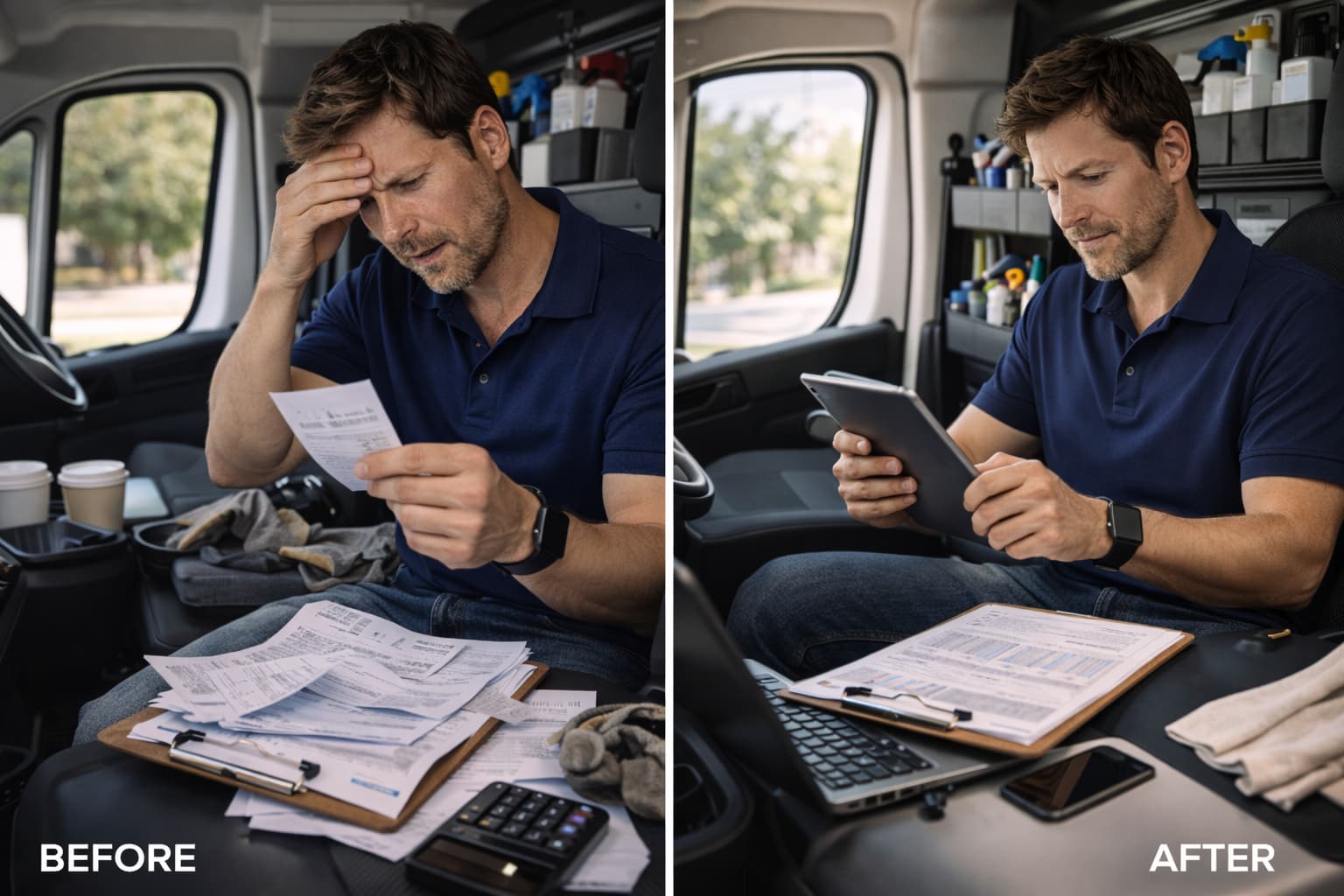
Small extras are easy to remember during a visit and easy to lose during billing. A repeated omission can stay hidden when the company reviews only invoice totals.
This audit focuses on scope-to-invoice leakage. It is different from the cost of poor tracking, which also includes rework and handling time.
Select a small, complete sample
Choose jobs that include a mix of ordinary scope and approved changes. Gather the original quote, the approval, the completion record and the final invoice. Keep customer data restricted to the people doing the review.
For each extra, ask what was approved, by whom, at what price or condition, and where the approval was saved. Do not infer permission from the fact that a task was performed.
Reconcile the invoice lines
Compare approved scope and delivered work with billed items. Classify differences as an omission, agreed courtesy, pricing error, disputed work or missing evidence.
Hypothetical example: four approved extras of $35 each were delivered but absent from the invoice sample. The omitted billing value is $140. It is not automatically $140 of recovered cash or profit; approval, delivery, correction and collection still need confirmation.
Correct the handoff
Make the approved change visible in the same place the office checks before invoicing. Name the person who reviews extras and define when the invoice becomes ready to issue.
Use the job closing structure so crews do not need to retell the visit. If extras are regularly performed without an agreed price, review the quote and scope rules before adding a billing reminder.
Track the cause after correcting the amount
Record the correction and its reason, then follow the next comparable sample. Measure omitted items, disputed corrections and time spent resolving them separately.
The goal is a repeatable agreement-to-invoice process. Aggressive collection of poorly documented charges is not a substitute for clear scope and approval.
Common questions
Should I invoice every task the crew performed?
Invoice according to the agreed scope, approval and applicable terms. Work performed without clear authorization needs review rather than an automatic extra charge.
Is every courtesy a revenue leak?
No. An intentional, approved courtesy is a commercial decision. An unrecorded courtesy makes the operation difficult to evaluate.
Sources & context
- Business management and financial records · U.S. Small Business Administration
General reference for business management and financial records. Calculations and cases here are simplified DOP examples, not customer results or accounting advice.