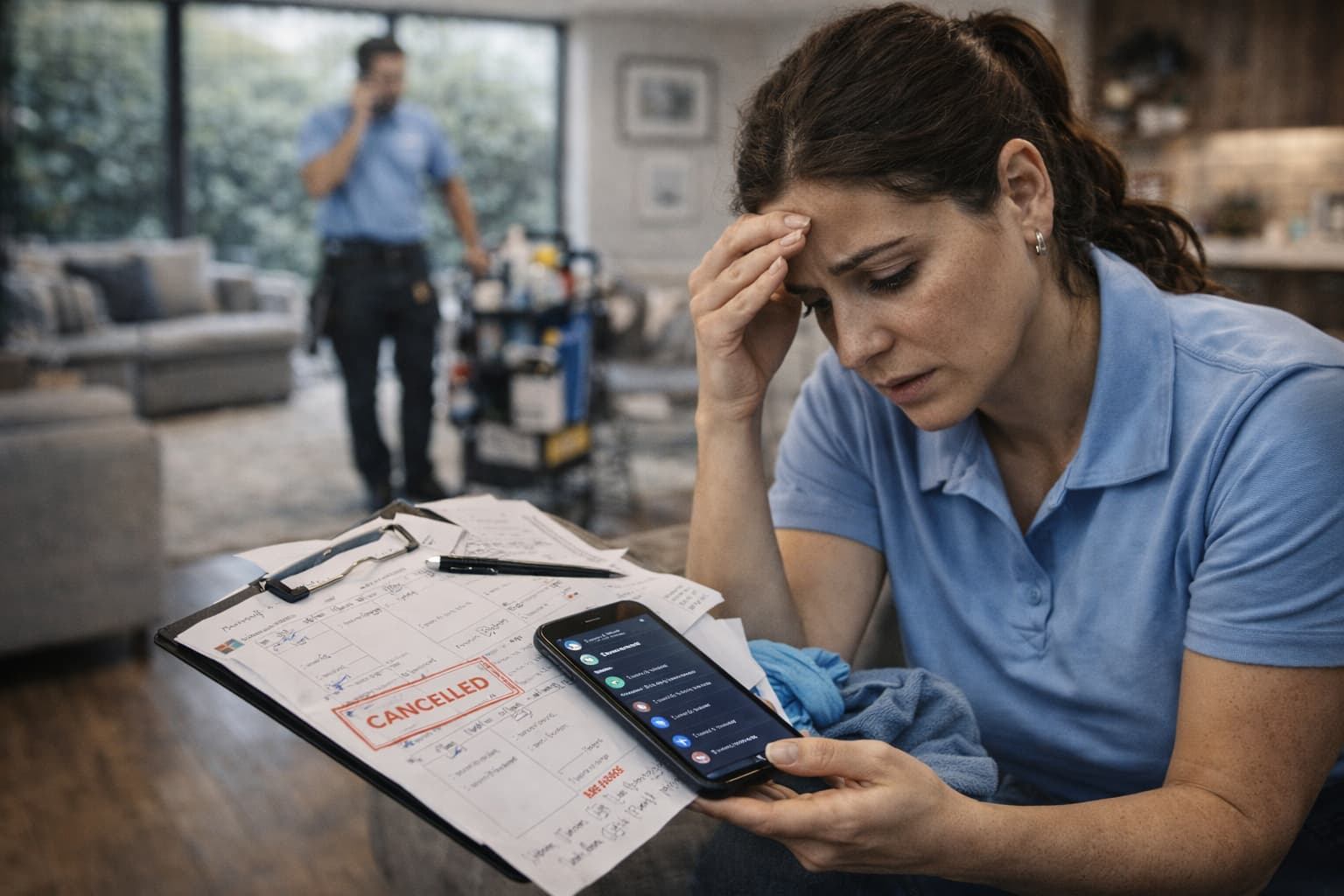
Start a cleaning service with a repeatable first job
Define your service, validate demand, estimate costs and test one complete visit before expanding a home service business.
THE SHORT ANSWER
Before expanding a new cleaning service, validate a specific customer need and test the entire visit: quote, access, execution, quality check, invoice and payment. Business registration and local requirements are a separate workstream that must match the services and location you choose.
What you’ll take away
- Choose a narrow service and customer before buying broadly.
- Budget both startup spending and the cash needed to operate.
- Test the complete job-to-payment process, not just the cleaning.
In this guide

Starting with a long list of services makes it difficult to estimate time, explain the offer and train another person. A focused first service gives you a smaller process to test.
This is an operating checklist, not a legal registration guide. Check the requirements for your activity with the relevant state, county and municipality, and obtain professional advice for employment, insurance and tax decisions.
Define a service you can describe precisely
Write down the customer, property type, geographic area, included tasks and exclusions. “Residential maintenance cleaning in a defined area” is easier to scope than “all cleaning for everyone.” Describe how a first visit differs from a recurring one.
Validate the need through conversations and real quote requests. Ask what the customer currently buys, what causes dissatisfaction and how they decide. A positive comment about your idea is weaker evidence than a request with a property, date and clear scope.
Build a cost and cash worksheet
Separate one-time setup items from recurring operating costs. Include equipment, supplies, transportation, insurance, administration and the time required to complete the work. Record when each expense must be paid and when customer money is expected.
Use your own measured time for the first quote. A hypothetical three-hour visit that takes five hours is a signal to revisit the scope or estimate, not evidence that the team needs to work faster. Read the pricing mistakes guide before turning that estimate into a repeatable price.
Prepare the first visit
Confirm access, contact details, tasks, exclusions, agreed price, payment arrangement and the process for approving extra work. Make sure workers understand the products, equipment and property-specific hazards they will encounter; use authoritative safety guidance and appropriate training.
Document what “finished” means with observable checks rather than “leave it perfect.” Include how to report damage, unavailable access or a task that cannot be completed safely.
Run the complete cycle
After the visit, compare planned and actual labor time, confirm the agreed delivery, create the invoice and check the payment outcome. Record the customer’s questions while they are still specific.
Repeat this small cycle before opening a second service line. Your next milestone is not a longer service menu. It is a job another trained person can understand, deliver and close using the same job record.
Common questions
Should I buy software before my first customer?
Use the simplest setup that preserves a reliable job record and your obligations. Test the workflow before committing to a larger system.
Does this checklist cover licensing and insurance?
No. Requirements depend on the service, jurisdiction and business structure. Confirm them with the responsible agencies and qualified advisers.
Sources & context
- Business planning and market research · U.S. Small Business Administration
General reference for planning and market research. The method and examples in this guide are DOP editorial proposals, not results from an SBA study.
- Cleaning industry safety resources · OSHA
Context on industry hazards. This DOP operations guide does not replace safety training or establish regulatory compliance.